


Preventing Concrete Fracture: The Engineering Behind High-Density Rubber Surfacing and Subfloor Protection
Tuesday November 17th, 2026How much dynamic force can a concrete subfloor endure before invisible micro-fractures begin to compromise its structural integrity?
While a typical concrete slab can comfortably support thousands of pounds of static weight, dynamic impact is an entirely different mechanical challenge. According to structural engineering studies, dropping a fully loaded barbell or dropping heavy equipment can generate peak dynamic stress exceeding several thousand pounds per square inch (PSI) in a fraction of a millisecond. Without proper impact mitigation, this sudden concentration of force easily surpasses the tensile limit of concrete, initiating micro-fractures that steadily grow into spiderweb cracking, surface spalling, and costly subfloor failure.
Key Takeaways
- Concrete subfloors possess high compressive strength but remarkably low tensile strength, making them vulnerable to shock fractures under high-energy impacts.
- Low-density materials, such as soft ethylene-vinyl acetate (EVA) foam, compress completely under shock loads, transferring peak kinetic force directly into the subfloor.
- High-density rubber surfacing dissipates kinetic energy laterally across its cross-linked polymer chains, mitigating force concentration before it reaches the concrete.
- Selecting specialized rubber thickness and tile configurations preserves foundational slabs, protects heavy gear, and ensures stable foot placement under heavy loads.
Structural Mechanics: Concrete Weakness Under Dynamic Impact
Concrete is exceptionally strong under compressive loads, easily handling static pressures between 3,000 and 5,000 PSI. However, its split tensile strength; the force it can withstand when stretched or flexed; is usually only 10% of its compressive capacity.
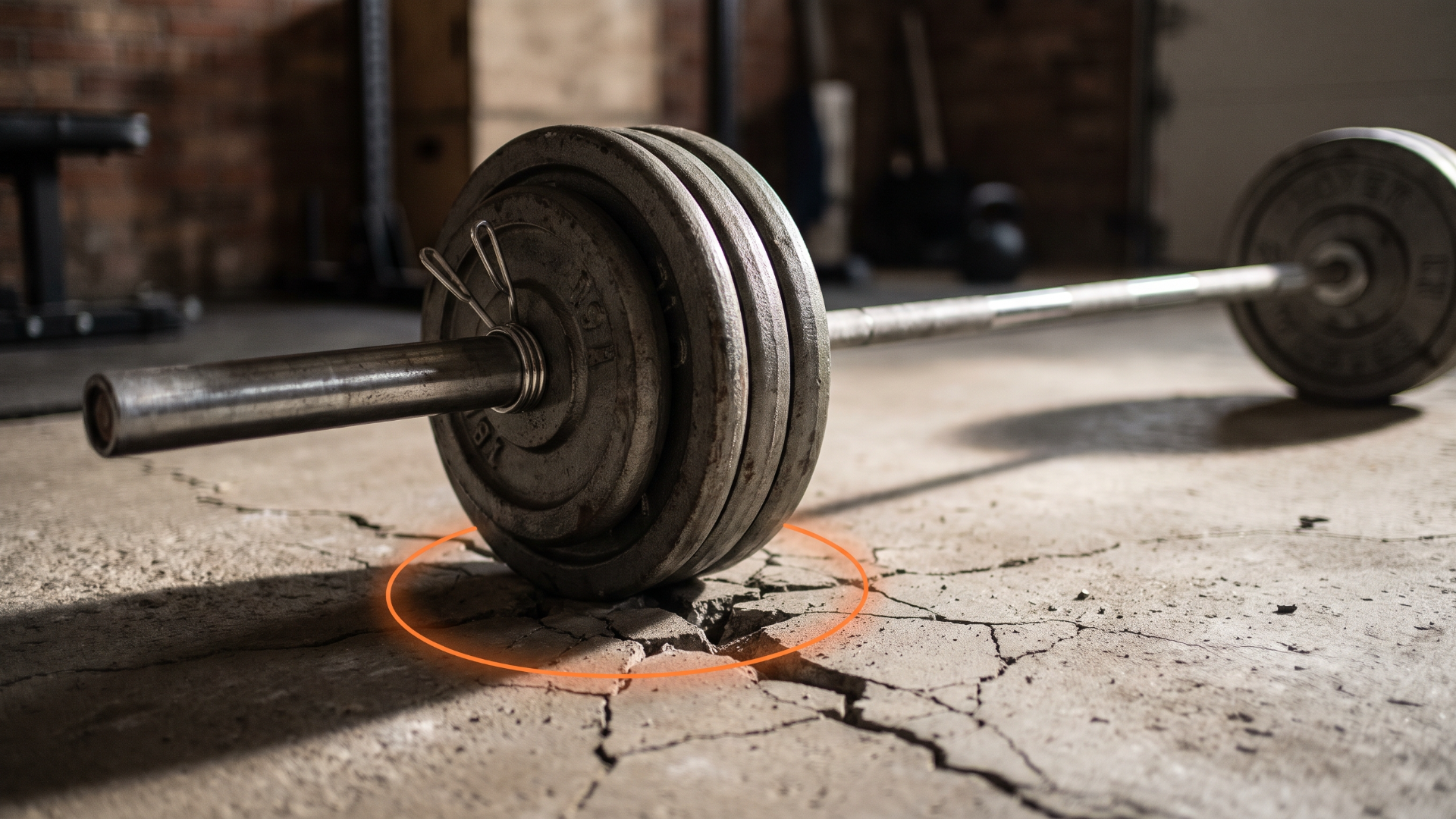
When a heavy object impacts a bare concrete floor, kinetic energy propagates through the slab as a compressive stress wave. Once this wave strikes the bottom boundary of the slab, it reflects back upward as a tensile stress wave. Because plain concrete lacks flexural elasticity, this sudden tensile strain creates internal micro-cracks. Over repeated drops or vibrations from industrial machinery, these hidden fractures extend toward the surface, leading to flaking, cratering, and progressive structural degradation.
The Low-Density Mat Trap: Bottoming Out Under Point Loads
A common mistake in home fitness builds, commercial workshops, and light industrial facilities is relying on inexpensive, low-density materials such as soft foam tiles.
Soft materials cushion low-energy impacts by compressing easily. However, under high point-load impacts; such as a dropped dumbbell or machinery drop; low-density foam exhausts its volumetric compression instantaneously. Once fully flattened (a state known as “bottoming out”), the soft foam ceases to absorb kinetic energy.
At that instant, the remaining force bypasses the surface layer completely and transmits into the underlying concrete slab as an unmitigated shock wave. Additionally, overly soft surfaces yield unstable footings during heavy lifting, creating safety risks for athletes performing squats, lunges, or overhead presses.
Polymer Dispersion: How High-Density Rubber Absorbs Shock
High-density vulcanized and recycled rubber surfaces operate on an entirely different mechanical principle. Rather than relying on air displacement or rapid material collapse, high-density rubber leverages cross-linked polymer chains to dissipate kinetic force.
When a heavy weight hits a surface like Gator® SHOCK Tiles or VersaRUBBER® Mats, the high-density polymer structure resists vertical displacement. Instead, it converts the focused point-load into a horizontal dispersion pattern across the mass of the rubber. By distributing shock over a significantly broader area, the peak force reaching any single point on the concrete subfloor stays safely beneath its tensile threshold.
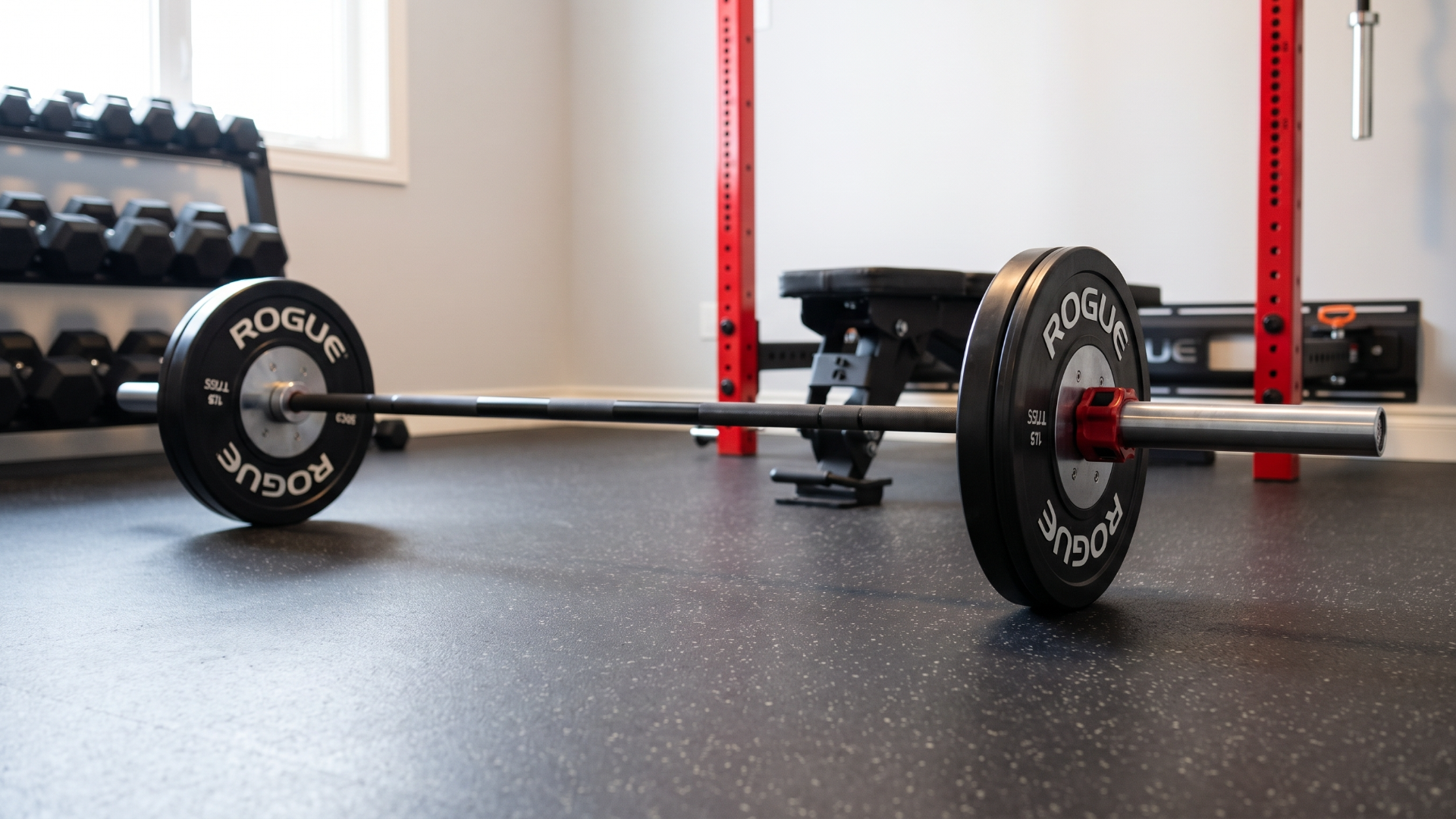
This lateral load spreading protects the concrete foundation while maintaining a firm, non-rebounding footing that stays stable under extreme load.
Practical Density Selection and Application
Determining the right surface density and thickness depends on the intended operational demands:
- Light to Moderate Impact Areas: Residential garages, functional training zones, and cardio areas benefit from continuous high-density rubber mats, such as VersaRUBBER® Mats. These provide continuous floor coverage, preventing surface gouging from dropped hand weights or light vehicle rolling loads.
- Heavy Free Weight and Powerlifting Zones: Dedicated drop-weight areas, power racks, and Olympic lifting platforms require extra-thick surfaces, such as Gator® SHOCK interlocking tiles (typically 30.16 mm thick). The dense rubber core absorbs severe dynamic energy from repeated heavy bar drops, shielding subfloors from spalling.
- Modular Home Gyms and Precision Fits: Interlocking tiles, such as our Gator® Pro Tiles offer exceptional point-load protection alongside straightforward installation.
Chris Frappier, one of our clients, experienced this performance firsthand in his setup: “I’m super happy I purchased Gator® Pro Interlocking Rubber Tiles for our home gym. The tiles are very easy to install – 40 minutes and all 30 tiles I ordered were snapped together and tamped down using a rubber mallet. The rubber flooring does not move or compress when performing heavy lifts” – he shared that he put 455 lbs on the bar and had no issues. “The tiles also provide excellent traction so your feet don’t slip when doing exercises like lunges or split squats – safety first. It’s the best investment I’ve made to our home gym. Highly recommend this product.”
Our Advantage
Protecting an underlying concrete slab requires specialized material selection grounded in physical engineering. At Perfect Surfaces, our dedicated product divisions deliver high-performance, recycled rubber surfacing engineered specifically to distribute extreme kinetic loads, prevent structural degradation, and extend the lifespan of your facility. Backed by over three decades of industry knowledge, strategic North American fulfillment networks, and direct access to real technical guidance, we make sure every project gets the exact density, thickness, and configuration it needs. You Stand On It. We Stand By It.
