


The Home Gym Flooring Trap: Why Thicker Rubber Is Not Softer and How to Zone Your Space
Tuesday November 24th, 2026Choosing a 12mm thick rubber floor will not make a home gym feel any softer, springier, or more cushioned underfoot. That counter-intuitive reality catches countless home gym builders off guard. Driven by the assumption that thicker rubber equals a softer workout surface, fitness enthusiasts regularly overspend on heavy-gauge home gym flooring, only to face an strenuous installation process with zero change in foot comfort.
Understanding how high-density rubber behaves; and why material density matters far more than thickness for comfort; is the key to building a cost-effective, high-performing home gym that protects subfloors and stays within budget.
The Material Density Myth: Why Thicker Rubber Isn’t Softer
A common misconception in gym planning is that thicker rubber translates to a softer, more cushioned floor. In reality, 6mm rubber feels identical underfoot to 12mm because the material density does not change. High-performance fitness flooring is manufactured from high-density post-consumer recycled rubber engineered to absorb impact energy without collapsing under heavy load.
Unlike squishy foam puzzle tiles or soft yoga mats that yield under pressure and create ankle instability during heavy squats, dense rubber provides the rock-solid foundation required to lift heavy loads safely. While rubber absorbs shock far better than concrete or hardwood, it is engineered to be firm. Sizing up in thickness adds more total mass to absorb shock before force reaches the structural slab beneath, but it does not change the physical firmness experienced under athletic shoes.
The Installation Factor: Managing Rubber Deadweight
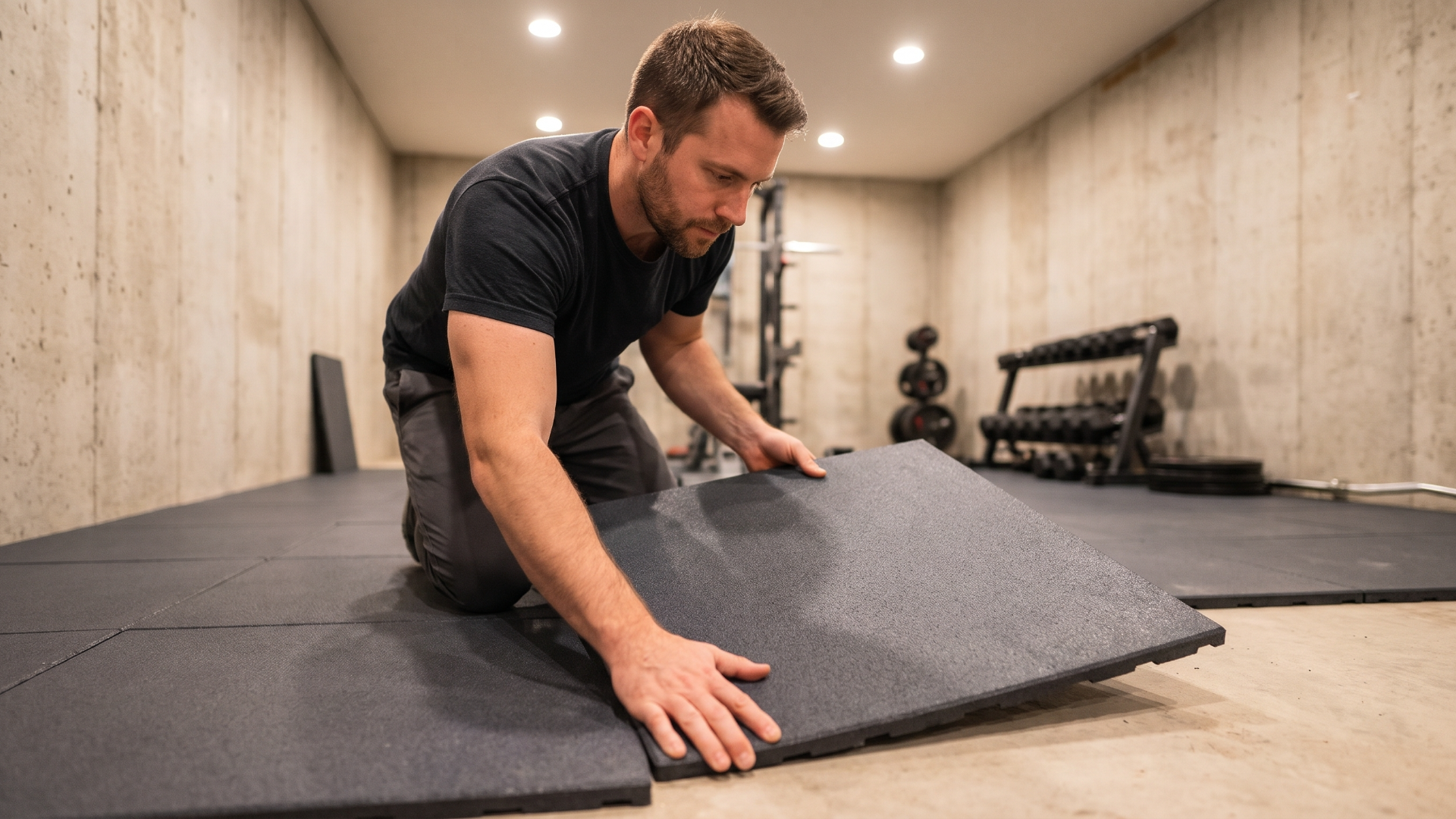
Beyond being unnecessary for most general fitness routines, thicker rubber adds significant deadweight that drastically complicates installation. Rubber is exceptionally dense; a single standard heavy-duty mat can weigh over 70 pounds, while full rolls of 12mm rubber can easily exceed 200 lbs.
For a single DIY homeowner working in a basement or garage, maneuvering these heavy materials around tight corners, trimming them around door frames, and achieving precision wall-to-wall cuts becomes an exhausting effort. Choosing excessive rubber thickness across an entire room needlessly increases physical exertion during installation without adding any functional benefit to low-impact fitness areas.
Right-Sizing Rubber Thickness for Fitness Equipment
Rather than overspending on maximum thickness across an entire room, homeowners achieve better results by matching rubber specifications to the most intensive workout performed in the space:
- 6mm (1/4″): Best suited for dedicated, standalone cardio or stretching rooms featuring exercise bikes, treadmills, ellipticals, and light dumbbell work. It protects subfloors from scratches, vibration, and sweat while remaining lightweight and easy to trim.
- 8mm (5/16″): The standard thickness used across most commercial fitness facilities, and the ideal all-around choice for most home gyms. Installing 8mm across the entire room delivers a reliable balance between subfloor protection, DIY practicality, and support for squat racks, weight stacks, and heavy static equipment.
- 10mm to 12mm+ (3/8″ to 1/2″): Sizing up to 10mm, 12mm, or thick modular drop tiles like Gator® SHOCK is rarely necessary unless loaded barbells are repeatedly dropped from waist height or above during powerlifting or Olympic weightlifting.
Why Uniform Thickness Beats Mixing Heights
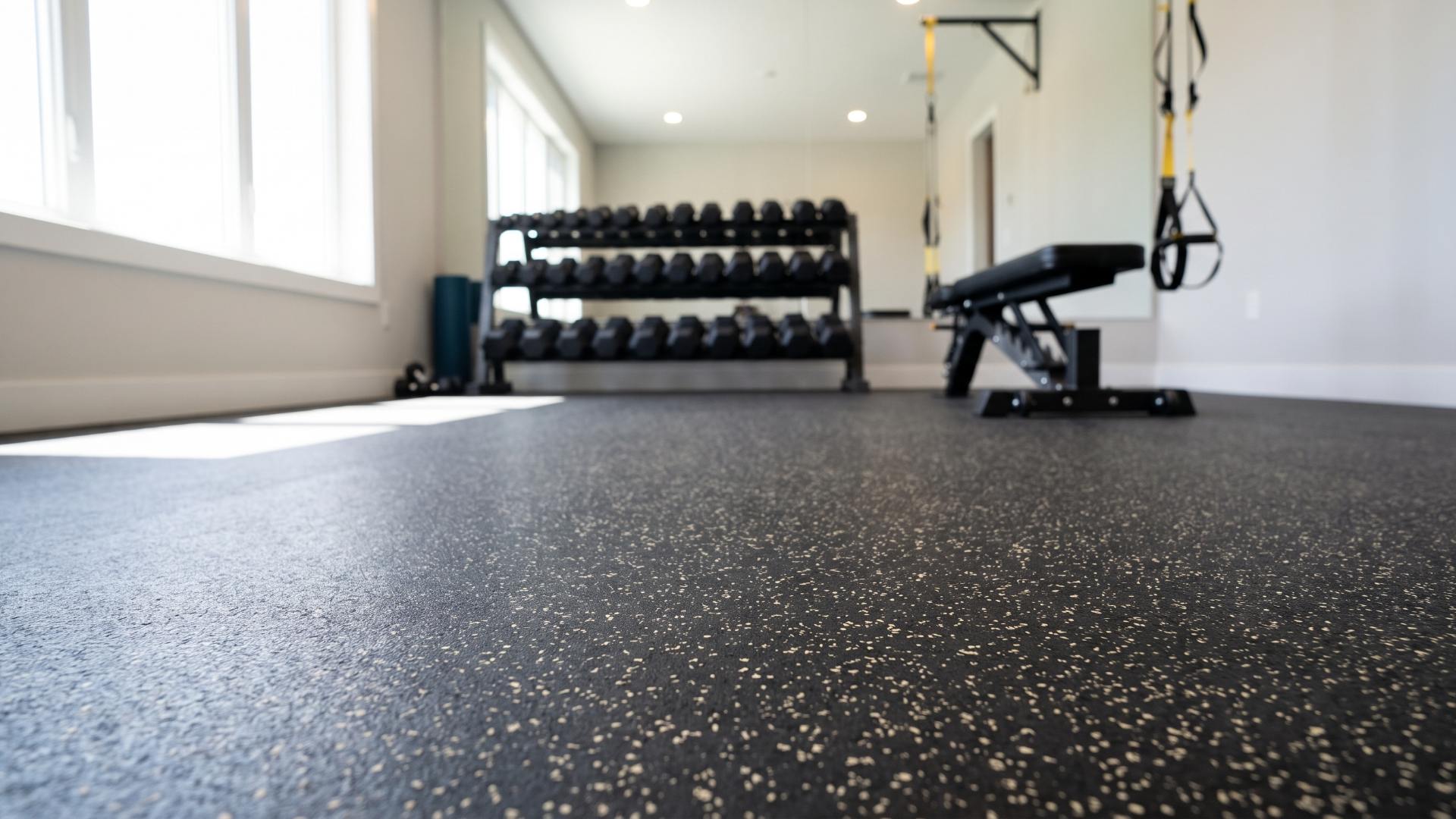
While it can be tempting to lay 6mm flooring in a cardio corner and 8mm flooring under a squat rack to save money, mixing different rubber thicknesses across the same workout area is generally not recommended. Even a 2mm height difference creates subtle lippage that becomes a persistent tripping hazard during dynamic movements or requires extra transition strips to level out.
The most practical, cost-efficient strategy for a home gym is to standardize the main floor to match your most demanding daily training. For most multi-purpose home gyms that combine cardio, dumbbells, and standard rack work, installing uniform 8mm flooring, such as Gator® PRO Interlocking Rubber Tiles; eliminates height transitions, simplifies layout, and ensures consistent stability wall-to-wall.
The one exception is a dedicated high-impact drop zone for Olympic lifting, powerlifting, or waist-height barbell drops. Rather than thickening the entire room for a single lifting station, isolate that activity in its own designated area using a thicker surface like 12mm rubber or Gator® SHOCK Tiles. To keep elevation changes safe where a thicker drop zone meets the main floor, finish the perimeter with beveled transition pieces; such as SHOCK Edge Ramps and Corners; for a clean, trip-free border.
Final Takeaway
Optimizing a home gym floor comes down to matching material specs to real equipment demands, not blindly buying the thickest rubber available. Thicker rubber exists purely for structural impact protection against dropped weights, not for underfoot comfort. Choosing a uniform thickness suited to your heaviest routine; and isolating extreme drop zones only where needed; prevents tripping hazards, cuts unnecessary material weight during DIY installation, and delivers lasting subfloor protection.
